
All Stories
Chief AI Officer or Distributed AI Leadership? How Boards Should Decide
Boards face a strategic decision between appointing a dedicated Chief AI Officer (CAIO) or adopting a distributed AI leadership model for AI governance. The optimal choice depends on an organization's specific needs for AI strategy cohesion, accountability, and cultural integration.

Four Areas Where C-Suite Leaders Must Get Transparent About AI — Before Stakeholders Fill the Silence
AI adoption is a leadership communication test requiring C-suite transparency in four critical areas: strategic intent, workforce impact, governance, and data ethics. Proactive, audience-specific communication is essential to build trust and manage stakeholder expectations before speculation fills the void.

Why Platform-Advisory Alliances Are Becoming the C-Suite's Answer to ESG Data Governance
Platform-advisory alliances are emerging as a comprehensive solution for C-suite executives grappling with complex ESG data governance and reporting challenges. This integrated model combines technology platforms with expert advisory services to address data fragmentation, regulatory changes, and stakeholder scrutiny.

Building a Robust ESG Data Governance Framework: From Collection to Credible Reporting
Building a robust ESG data governance framework is crucial for credible sustainability reporting, treating ESG data with the same discipline as financial data. This involves defining clear ownership, implementing control activities across the data lifecycle, and leveraging established models like DCAM and COSO.

5 Ways PlayNow Portal Takes the Hassle Out of Finding Trusted Casino Bonuses
Finding reliable and valuable casino bonuses can feel like a full-time job for many Aussie players. The online gaming landscape is vast, making it difficult to sift through countless offers to find promotions that are bo…

The AI-Ready Board: A Framework for Assessing Director Skills
Corporate boards must proactively assess and develop AI governance skills to effectively oversee this transformative technology. A structured framework helps identify and address critical knowledge gaps in strategic imperative, risk management, composition, education, and workforce impact.

Zhong Yang Financial Group Appoints New Directors to Execute AI Strategy
Zhong Yang Financial Group has appointed Dean Huge and Yuli Yan as new directors to its board, signaling a strategic move to accelerate its artificial intelligence initiatives. These appointments align the company's governance with its August 2026 mandate to expand AI across its core financial businesses and develop new technology-driven solutions.

The CHRO’s 2026 Mandate: Balancing AI Efficiency with Workforce Trust
In 2026, CHROs must balance AI-driven efficiency with workforce trust by fostering strategic HR-IT collaboration and prioritizing human-centric AI design. Successful HR technology adoption hinges on augmenting human capabilities and maintaining employee agency.

Rheem Splits Tech Leadership, Appointing New CTO and Dedicated AI Transformation EVP
Rheem has restructured its technology leadership, appointing Eric Varton as CTO to drive global product innovation and Alan Machuga as EVP of Digital Strategy & AI Transformation to accelerate enterprise-wide digital integration.

Step Onto the Active Side of Med Beds With Anti-Aging Bed® Vibration Platforms
Anti-Aging Bed® vibration platforms offer an active alternative to traditional Med Beds, transforming wellness technology into an engaging, movement-based experience. These platforms allow users to stand and actively control their sessions, fitting into a home gym or workout area.

A Board Director's Guide to Integrating Nature Risks into Enterprise Risk Management
Corporate boards must integrate nature-related risks into Enterprise Risk Management (ERM) frameworks, recognizing them as core financial, operational, and strategic concerns. This approach ensures long-term resilience and fulfills directors' fiduciary duties by translating ecological issues into familiar business risk categories.

Sheridan Capital Partners Closes Two Healthcare Funds Totaling $1.345 Billion
Sheridan Capital Partners has successfully closed two new funds, securing a combined $1.345 billion in capital for healthcare investments. The firm's flagship Fund IV raised $1.1 billion, nearly doubling its predecessor, while a new Healthcare IT Fund I secured $245 million.

Boards Pivot to Skills: The Expertise Areas in High Demand for New Directors
Corporate boards are strategically recalibrating recruitment priorities, moving from demographic characteristics to a focus on specific, high-demand skills. This shift favors candidates with deep expertise in areas like AI governance, cybersecurity, and strategic M&A, often held by active executives.

A 5-Point HR Due Diligence Checklist for Successful M&A Deals
Human resources due diligence is a critical process in M&A, essential for uncovering workforce risks and opportunities to ensure deal value. A 5-point checklist covers talent, compliance, compensation, technology, and culture, guiding successful integration and value realization.

TCS Property Management vs. Self-Management: Which Actually Saves You More Money in 2027?
This article compares TCS Property Management to self-management, revealing how DIY landlords face hidden financial traps like extended vacancies and legal risks. Professional firms, powered by technology and expertise, can transform management fees into net profit.

A Prioritization Framework for Mid-Market Digital Transformation
Mid-market companies require a tailored digital transformation approach due to resource constraints and pressure for rapid returns. A prioritization framework helps select high-impact initiatives that balance ambition with operational realities, focusing on tangible value and manageable steps.

A Practical Framework for Implementing a Circular Supply Chain
Transitioning to a circular supply chain offers businesses strategic advantages like increased resilience, lower costs, and reduced emissions. Successful implementation requires a structured, phased approach driven by C-suite collaboration and a focus on redesigning sourcing, products, and operations.

An AI Investment Framework for Mid-Market Leaders: Build, Buy, Hire, or Wait?
Mid-market companies face challenges scaling AI beyond experiments, with only 2% operationalizing it effectively. A structured investment framework (Build, Buy, Hire, or Wait) is crucial for strategic AI integration and achieving scalable impact.
5 Key Due Diligence Areas for Corporate VCs Evaluating AI-Powered Startups
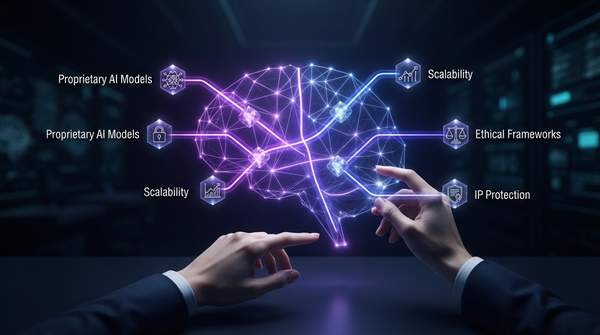
Corporate VCs require a specialized due diligence framework for AI-powered startups, focusing on proprietary models, data governance, scalability, ethical AI, and IP protection. Leveraging AI tools can enhance the efficiency and accuracy of this evaluation process.

7 Cybersecurity Gaps Small Businesses Should Address Before They Become Problems
Small and midsize businesses often face unique cybersecurity challenges, as security is frequently an afterthought rather than integrated into their IT strategy. This article highlights seven common cybersecurity gaps, such as relying solely on passwords, neglecting email security, and viewing antivirus as a complete solution.

Houlihan Lokey Bolsters FinTech Group with Digital Assets MD, Enhancing M&A and Capital Raising
Houlihan Lokey has appointed Chris McMillan as Managing Director to its FinTech Group, significantly bolstering its digital assets advisory capabilities. This strategic hire enhances the firm's expertise in M&A, capital raising, and strategic guidance for clients navigating the evolving digital assets sector.

5 Critical Considerations for Boards in Overseeing AI in HR and Talent Management
Boards must actively oversee AI integration in HR and talent management to navigate complex risks like bias and privacy, and to leverage opportunities. Establishing robust ethical guidelines, data governance, regulatory compliance, and workforce readiness strategies is crucial for responsible AI deployment.

Essential Cybersecurity Controls for Mid-Market Companies to Mitigate Advanced Threats
Mid-market companies face unique cybersecurity challenges with limited resources against advanced threats. This article details essential controls like MFA, EDR, security training, and incident response plans to build resilience.

Strategic Framework for Post-Quantum Cybersecurity for C-Suite Leaders
The advent of cryptographically relevant quantum computers poses a significant threat to current enterprise cybersecurity, necessitating proactive strategic planning. C-suite leaders must implement a phased framework to assess cryptographic risks and transition to post-quantum cryptography to safeguard sensitive data.